INSIGHTS
This is your main NEWS category. Note that Joomla has another NEWS category built in. This one is for the plug-in called K2.
How SEA-PLM 2024 Ensures Reliable and Comparable Grade 5 Learning Data
When SEA-PLM releases findings on reading, mathematics and writing, the final figures are only the visible end of a much longer process. Before any result can inform policy, the assessment must define who is represented, select schools and students fairly, capture responses consistently, and place performance on a scale that can be interpreted across countries and, where appropriate, over time.
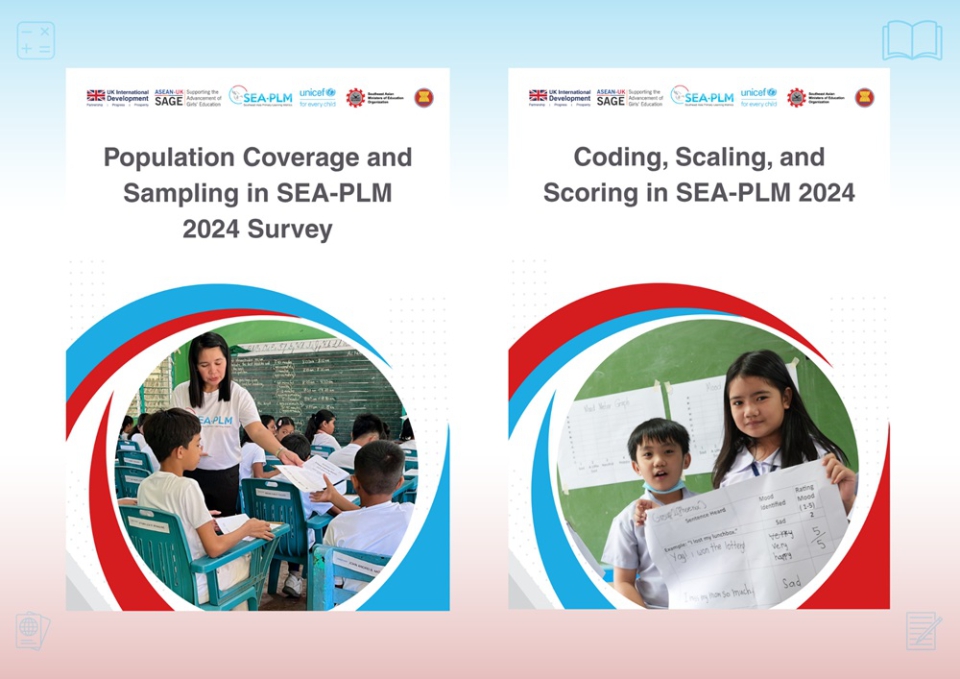
Two companion publications, Population Coverage and Sampling in SEA-PLM 2024 Survey and Coding, Scaling, and Scoring in SEA-PLM 2024, open this process to readers. Together, they show that reliable learning evidence is built through a connected chain of decisions, safeguards and quality checks, from the first school list to the final score.
SEA-PLM 2024 focused on students enrolled in Grade 5, defined as the grade representing five years of schooling from the first year of primary education. This common definition was applied across participating countries while recognising differences in school systems, enrolment structures and national contexts. The goal was not simply to test a large number of children, but to make sure the results reflected the diversity of Grade 5 classrooms across the region.
Participating countries worked from official enrollment data provided by Ministries of Education at the time of data collection. The sampling publication also documents where coverage was reduced because of very small schools, remote locations, special education settings, international schools, or other practical and contextual challenges. This transparency matters: even a small change in population coverage can affect how results should be interpreted.
SEA-PLM used a two-stage stratified cluster sampling method. First, schools were selected using probability proportional to size, so a school's likelihood of selection reflected its number of Grade 5 students. Second, one Grade 5 class was randomly selected within each participating school, and all students in that class were invited to take part.
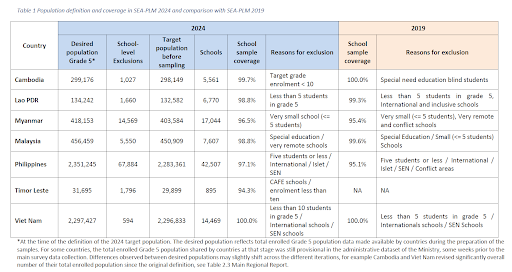
Population definition and coverage in SEA-PLM 2024 and comparison with SEA-PLM 2019
Every participating country exceeded the minimum standard of 150 schools and 4,000 students. In total, 36,662 students took part. Overall response rates were above 90 per cent in every country, with Cambodia and Viet Nam both recording rates above 99 per cent.
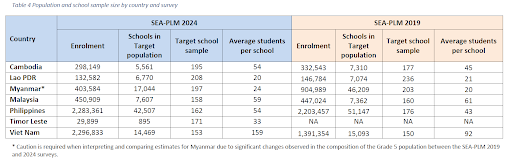
Population and school sample size by country and survey
Oversampling provides participating countries with the flexibility to collect more detailed evidence on specific population groups, geographic areas or education settings that are especially relevant to national priorities. Where needed, countries can supplement the main national sample by selecting additional schools or students from particular subgroups, enabling more precise analysis beyond the overall national estimate. These additional samples are designed in coordination with the sampling contractor so that national analytical needs can be addressed without compromising the representativeness and technical requirements of the main SEA-PLM sample.
Designing an assessment
Once the sample was selected, the next challenge was to collect enough information without overburdening individual students. SEA-PLM 2024 used paper-and-pencil instruments containing a combination of multiple-choice and constructed-response questions. Eighteen rotated test booklets allowed each child to answer a manageable selection of questions in two of the three learning domains. Students had one hour for the test and 30 minutes for the questionnaire.
The language of assessment was selected by each participating country to reflect its national education and linguistic context, while maintaining the common SEA-PLM assessment framework. In some countries, additional language options were used through secondary samples: for example, the Philippines administered the reading assessment in Filipino for its secondary sample. Cambodia also included a secondary sample of students attending multilingual education (MLE) schools. These arrangements allowed countries to respond to their specific language contexts while applying consistent SEA-PLM test design and technical procedures.
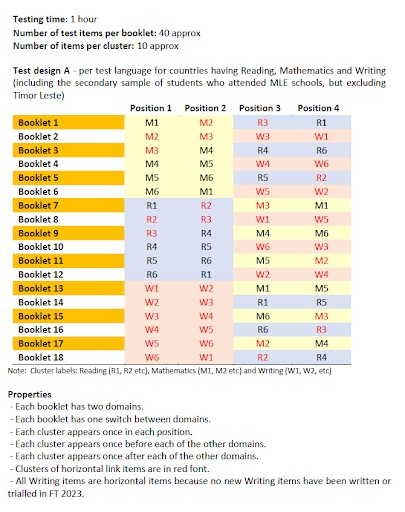
SEA-PLM 2024 used 18 rotated test booklets so students could answer a manageable number of questions while still allowing results to be reported across learning domains.
Coding means matching a student's response to a clear description of performance. Multiple-choice answers can be processed electronically. Constructed responses require trained coders to use detailed guides so that similar answers are treated consistently, whether a child writes a word, a phrase or a number, or shows the steps behind their thinking. These open responses can reveal whether a student understands a passage or a mathematical idea, rather than simply recognising one option among four.
Writing requires even greater care because every task asks students to produce their own text. SEA-PLM 2024 examined content development, organisation, language use, grammatical accuracy, vocabulary, punctuation and spelling. Partial-credit scoring captured different levels of performance instead of reducing each response to a simple correct-or-incorrect judgement.
Compared with the 2019 cycle, SEA-PLM 2024 introduced more direct training, country-level support, double-blind coding, clearer reconciliation procedures and stricter security protocols. Each writing script was marked independently by two coders. Where their judgements differed, responses were reviewed and adjudicated. This strengthened scoring consistency across countries and languages.
New reading and mathematics items were also developed through a regional process involving participating countries and experts from the Australian Council for Educational Research (ACER). Original items submitted by countries were reviewed, trialled and refined alongside ACER-developed items and secure trend items from 2019.
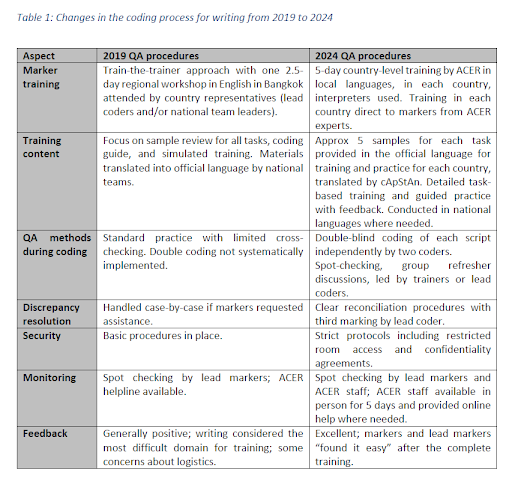
SEA-PLM 2024 strengthened writing quality assurance through country-level training, double-blind coding, clearer reconciliation procedures and stricter security protocols.
Scaling makes it possible to place results from different booklets and groups of students on one measurement scale. SEA-PLM used item response theory methods to estimate student performance and item difficulty. Before final scores were produced, items were reviewed for statistical fit, gender differential item functioning and item-country interaction. In plain language, these checks examined whether questions worked fairly and consistently across groups and countries.
Reading and mathematics results from SEA-PLM 2024 were linked to the 2019 scale through horizontal equating. Secure trend items from the previous cycle provided the bridge. After their stability was reviewed, the 2024 scales were shifted onto the historical 2019 scale, allowing performance to be examined over time.
Writing was treated differently. The behaviour of writing trend items changed substantially between cycles, including an average regional increase of 12.4 per cent in item facilities. SEA-PLM therefore placed 2024 writing results on a new scale instead of equating them to 2019. The implication is clear: 2024 writing results should not be compared directly with those from the earlier cycle.
Data quality from fieldwork to reporting
The work between test administration and final reporting is equally important. SEA-PLM 2024 used the Maple platform to support within-school sampling, instrument allocation, participation tracking and data entry. The process connected class lists, student identifiers, booklet allocation, attendance records and submitted responses. After national teams provided their files, ACER conducted further checks, cleaning and recording to align national datasets with the regional structure.
The final calibration produced strong regional reliability estimates across all three domains. Writing recorded the highest estimates, while mathematics and reading literacy also met strong standards. These figures support confidence that the scales capture performance consistently.

SEA-PLM 2024 reported strong reliability across mathematics, reading literacy and writing, supporting confidence in the final domain scales.
Taken together, the two publications show that learning data is never produced in a single step. It depends on up-to-date school lists, accurate enrollment records, transparent coverage decisions, representative sampling, careful administration, consistent coding, robust scaling and honest reporting of limitations.
For governments and education partners, this is more than a technical lesson. The quality of regional evidence depends heavily on the strength of national education data systems and coordination. When those foundations are sound, SEA-PLM findings can do more than describe where children stand: they can guide decisions about where support is needed and how education systems can respond.
As Southeast Asia continues to prioritise foundational learning, transparency about the measurement process is essential. By opening the 'black box' behind its results, SEA-PLM helps policymakers, researchers and the public understand not only what the data says, but also why they can have confidence in it.
–
SEA-PLM is supported by the Government of the Republic of Korea through the ASEAN-Korea Cooperation Fund (AKCF). Its content is the sole responsibility of the SEA-PLM Regional Secretariat and does not necessarily reflect the views of AKCF.”

|
|
|
|
|
|
|
|


New SEA-PLM 2024 reveals gains and persistent literacy gaps: 1 in 5 children struggling in writing across six Southeast Asian countries
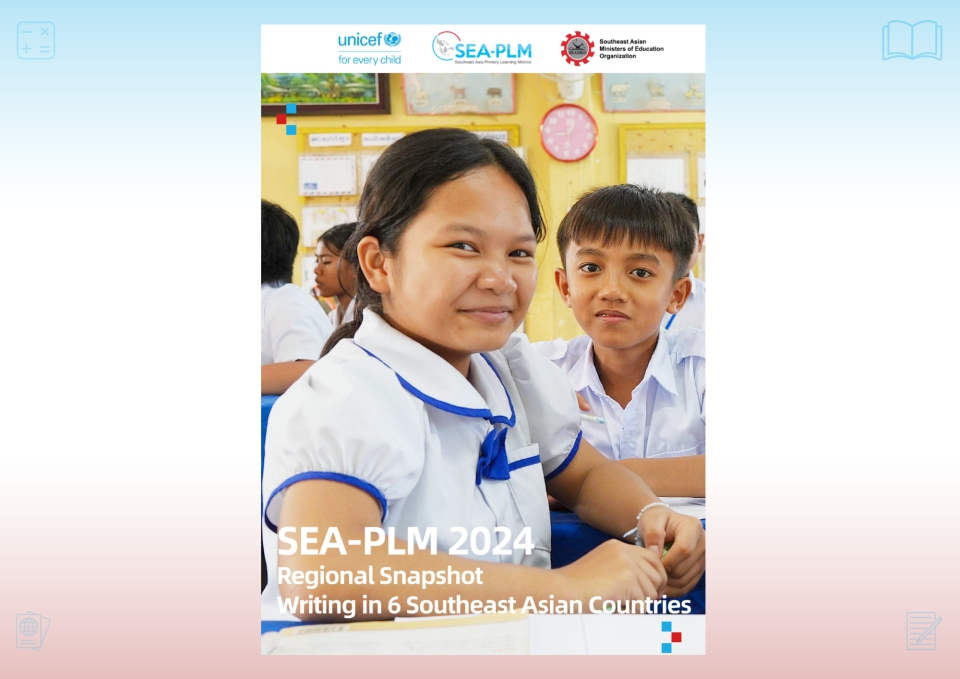
The SEA-PLM 2024 Regional Snapshot on Writing brings new attention to children’s ability to express ideas in writing, showing that while many Grade 5 students can produce simple and relevant texts, large disparities remain across and within countries, particularly by socioeconomic background, gender, and the language spoken at home.
The SEA-PLM 2024 Regional Snapshot on Writing offers a broader view of foundational learning in Southeast Asia by focusing on a skill that is essential, but often less visible in large-scale assessment reporting. Implemented by all six participating countries in the 2024 cycle, the writing domain complements previously released findings in reading, mathematics, and contextual factors, and helps complete the picture of how children are learning across the region.
Regional results indicate that many Grade 5 students are still developing foundational writing skills. Overall, 31.2 per cent of students were in Proficiency Band 3, demonstrating the ability to generally write simple texts with relevant ideas. Meanwhile, 21.8 per cent reached Band 4, and 5.4 per cent attained Band 5, reflecting stronger abilities to produce more detailed, cohesive texts using a wider range of vocabulary. At the same time, the findings underscore persistent challenges in writing proficiency across the region. Around one in five students (20.2 per cent) performed at Band 1 and below, while a further 21.4 percent were in Band 2. These results suggest that a substantial proportion of children continue to face difficulties in expressing their ideas clearly and effectively in writing.
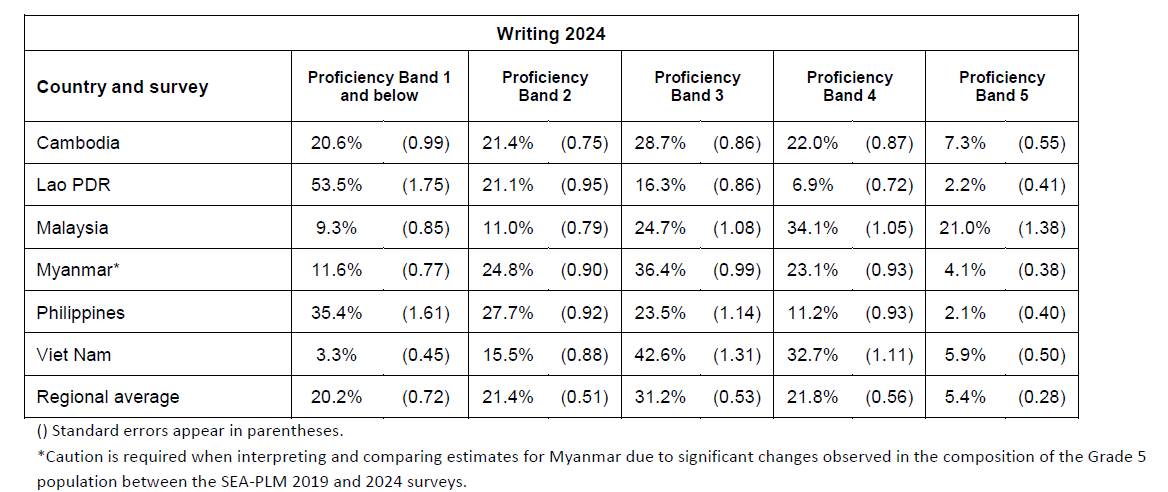
2024 Distribution of Writing Proficiency Levels
The snapshot also reveals wide variation across countries. With 3 countries (Cambodia, Malaysia, and Viet Nam) demonstrating national performance above the regional average, with Myanmar recording a high performance, caution is required in interpreting its results because of changes in the Grade 5 population between survey cycles. The rest of the countries (Lao PDR and the Philippines) performed below the regional average and had a significant share of children in Band 1 and below.
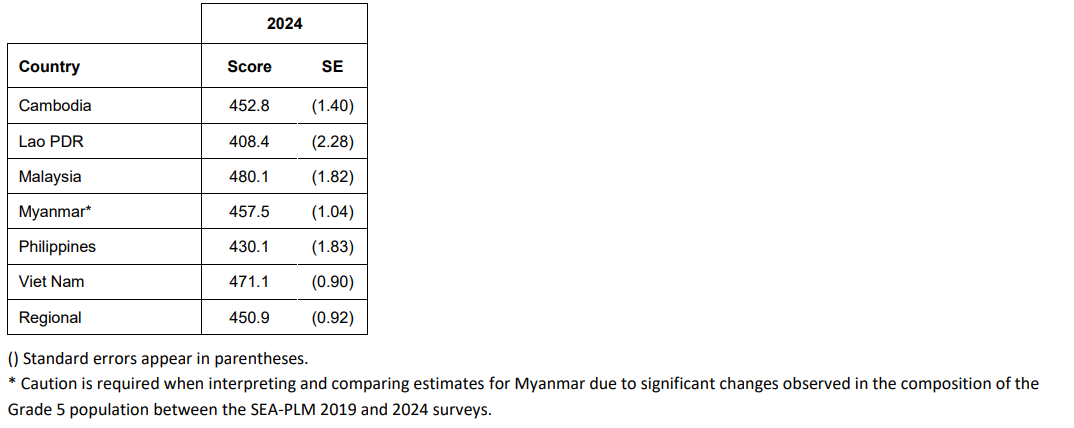
2024 National Average Scores in Writing
The findings also point to persistent inequities in writing achievement. In every participating country, students from the highest socioeconomic quartile outperformed those from the lowest quartile, with score gaps ranging from 21.9 to 56.5 points. Girls outperformed boys in all six countries, with differences ranging from 13 to 22.6 points. In addition, children who spoke the language of instruction at home generally performed better than those who did not, with statistically significant differences observed in four countries.
The report stresses that the 2024 writing results should not be directly compared with those from 2019. SEA-PLM delayed the release of the writing findings after a technical review found that changes in coding, quality assurance, and scoring procedures may have affected cross-cycle comparability. While this means the 2024 results cannot be used to measure trends against 2019, the snapshot confirms that the data remain robust and reliable for understanding writing performance within the 2024 cycle and across participating countries.
Taken together, the findings underline the importance of writing as a core part of foundational learning. It also reinforces a familiar message from across the region: learning outcomes are shaped not only by what children are taught, but by the opportunities and support available to them at home and in school. The full SEA-PLM 2024 Regional Report on Writing, scheduled for release in Q2 2026, is expected to provide further analysis to support more inclusive and responsive education policies.
SEA-PLM Quality Embodied through its 2024 Test and Questionnaire Assessment Framework
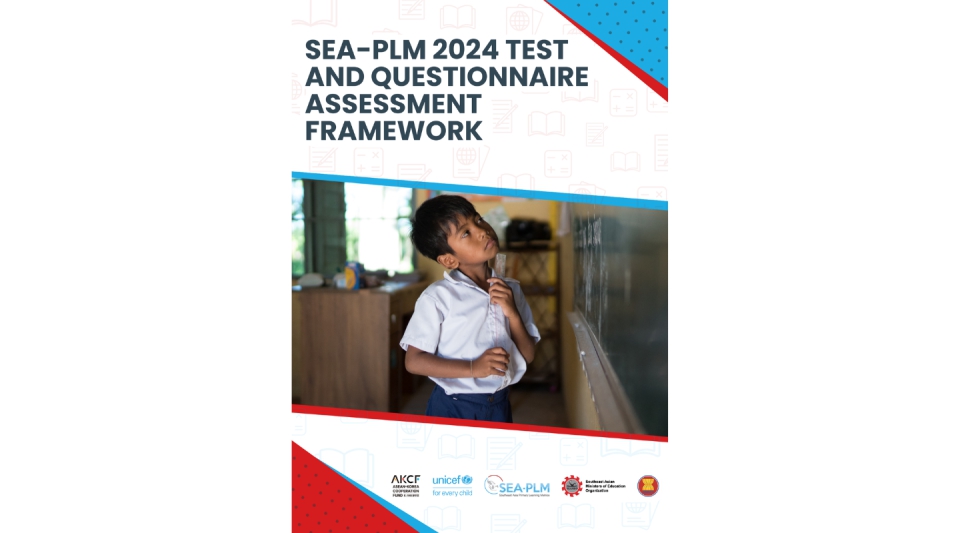
The Southeast Asia Primary Learning Metrics (SEA-PLM) programme strives to achieve the rigor and quality of international large-scale assessments (ILSA) while addressing the unique challenges and contexts of Southeast Asian countries. The 2024 Test and Questionnaire Framework exemplifies SEA-PLM’s commitment to scientific rigor and high-quality development of cognitive tests and questionnaires, serving as an external measurement of education systems in the region.
Considering the unique educational contexts of Southeast Asian countries, the framework emphasizes the relevance of the literacy-based approaches and contents, ensuring the assessment encompasses a broad range of proficiencies of what children can do and their potential for continuous learning. This makes SEA-PLM 2024 instruments responsive and suitable countries’ and local needs.. The assessment framework includes a detailed definition of literacy in reading, writing, and mathematics, and outlines the processes for incorporating emerging skills and 21st century constructs in the questionnaires administered across stakeholders.
The confirmation of the SEA-PLM survey initiative as a cyclic comparative study in Southeast Asia – SEA-PLM 2024 as the second round - offers new perspectives to refine and improve some
components of the original framework developed for the first round of SEA-PLM. The aim is to
maintain a strong and robust foundation, based on many trend items and similar test formats and data collection procedures, to allow comparisons of trends over time between Grade 5 cohorts across the future cycles of assessment.
This document presents the SEA-PLM 2024 test and questionnaire framework to take into account lessons learned, experiences and the latest methodology direction of the survey. Key contents are presented in 5 chapters, SEA-PLM surveys approach (Chapter 1), cognitive test – reading (Chapter 2), writing (Chapter 3) mathematics (Chapter 4), and contextual questionnaires (Chapter 5). The final version of the SEA-PLM 2024 contextual student, parent, teacher and school questionnaires master source version in English are accessible in Annex 1, 2, 3 and 4. The SEA-PLM 2024 assessment framework is designed to be flexible to accommodate future survey iterations.
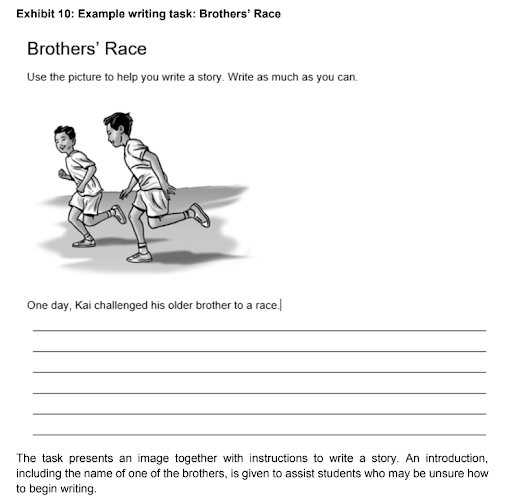
To gain a deeper understanding of how the SEA-PLM survey has been implemented using this framework and designed tests and questionnaires, SEA-PLM is pleased to publish and invite the education expert to explore the assessment framework document. This comprehensive guide offers insight into the development process, the rationale behind the updates, and the specific methodologies employed. Check the document to see how SEA-PLM continues to advance educational assessment and contribute to the improvement of primary education across Southeast Asia.
You can access the document on the SEA-PLM 2024 test and Questionnaire Framework here https://www.seaplm.org/index.php/sea-plm-2024/frameworks-2024

|
|
|
|
|
|
|
|



–
For media inquiries and more information, please contact:
Rizky Ashar (This email address is being protected from spambots. You need JavaScript enabled to view it.), SEA-PLM Regional Secretariat
SEA-PLM Compendium of items: Advancing foundational skills in reading and mathematics
Creating a roadmap to accelerate foundational learning in Southeast Asia

Siem Reap, Cambodia | Anieluz Pastolero: Back-to-back with the 14th SEA-PLM Regional Steering Committee, the High-Level Regional Conference on Foundational Learning, collaboratively organised by the SEA-PLM Regional Secretariat, SEAMEO Secretariat, UNICEF EAPRO, and the ASEAN Secretariat, spotlighted the enduring crisis in foundational learning as well as the progress, gaps, and opportunities for accelerating foundational learning across the region. Drawing from the findings of SEA-PLM 2019 and other international comparative large-scale assessments, substantial gaps in literacy in reading, writing, and math among primary school students have persisted even before the pandemic, underscoring the urgent need for concerted efforts to support learners across the region.
Several themes and issues were unpacked by the Ministries of Education in the region and foundational learning experts throughout the discussions, ranging from empowering teachers, supporting learners, transforming curriculum, early childhood learning, and financing primary education. The platform provided a rich set of perspectives to key actors in the education arena on the bottlenecks and opportunities to improve the learning crisis, particularly on cultivating foundational learning of children in the region.
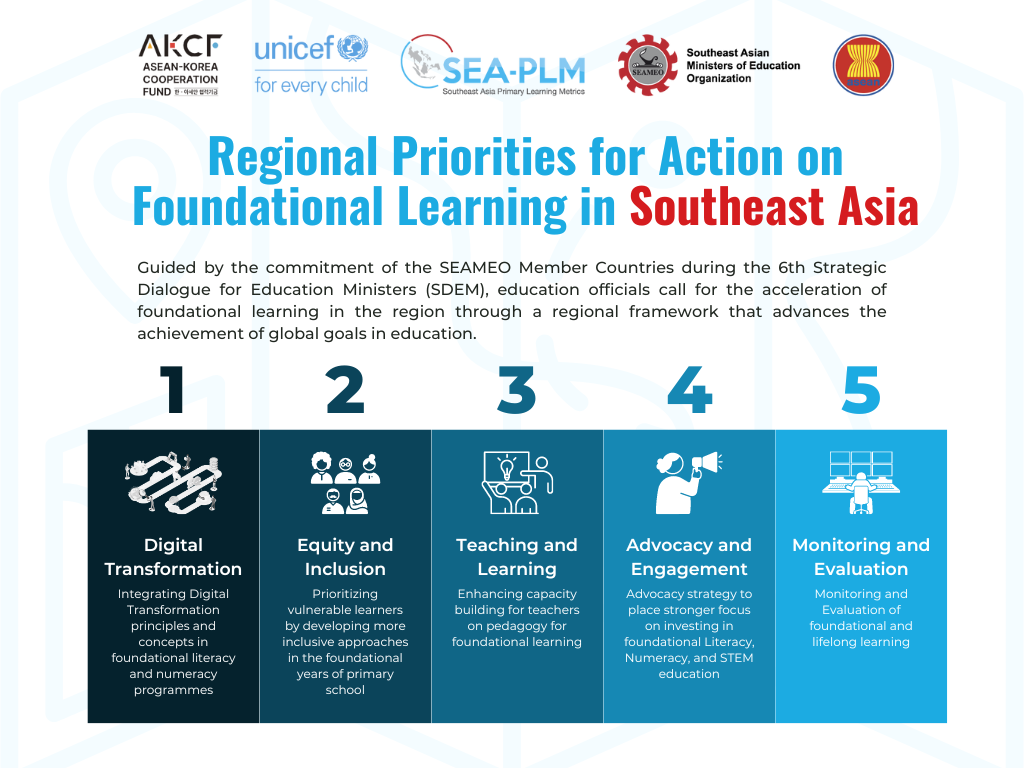
The conference concluded with the formulation of the regional priorities for action on foundational learning, aligning with the strategies identified during SEAMEO’s 6th Strategic Dialogue for Education Ministers in February 2023, as committed by the 11 SEAMEO member countries. The outcome document of the Conference will be released upon final consultation with countries. The SEA-PLM Regional Secretariat, with its technical collaborators, is also gearing up for the launch of the SEA-PLM regional reports focused on improving foundational learning across the region, with topics ranging from early childhood learning, equity factors, learning trajectories, and the exploration of global citizenship education.
The event was held on 23 February 2024 and attended by delegates from the ASEAN-Republic of Korea Cooperation Fund and the Ministries of Education of Brunei Darussalam, Cambodia, Lao PDR, Malaysia, Myanmar, Philippines, Thailand, Timor Leste, and Viet Nam. Representatives from the Global Coalition on Foundational Learning also took part in the panel discussions, including the Foreign Commonwealth and Development Office, USAID, UNESCO, UNICEF, and World Bank, together with the education and policy experts from the Korea Institute for Curriculum and Evaluation, Korean Educational Development Institute, Association of Southeast Asian Teacher Education Network, SEAMEO CECCEP, ACER, and British Council.
Check the output document of the conference in the link below
High-level Regional Conference on Foundational Learning Discussion Results