Hanoi, May 2026 - The 16th Regional Steering Committee (RSC) Meeting in Hanoi reaffirmed an important perspective: evidence matters, but only when it informs decision-making and drives change in schools, in classrooms, and in children’s lives.
This was the central message emerging from the 16th Southeast Asia Primary Learning Metrics (SEA-PLM) RSC Meeting, held from 11 to 13 May 2026 in Hanoi, Viet Nam with support from the Government of the Republic of Korea through the ASEAN-Korea Cooperation Fund (AKCF). Following the launch of the SEA-PLM 2024 Main Regional Report in December 2025, the meeting brought together participating countries and partners to reflect on what the latest evidence means for the next steps in improving foundational learning across the region.
The Meeting commenced with a high-level dialogue with H.E. Mr Pham Ngoc Thuong, the Deputy Minister of the Ministry of Education and Training of Viet Nam, and Datuk Dr Habibah Abdul Rahim, Director, SEAMEO Secretariat, and SEA-PLM Co-Chair; and Mr Matt Brossard, Senior Advisor for Education, UNICEF Global Education Practice, underscoring the importance of Viet Nam’s strong leadership in advancing foundational learning and its enduring commitment to the SEA-PLM programme. The dialogue highlighted how regional assessment evidence can better inform national education priorities when policymakers are actively involved in the discussion.

High-level dialogue with H.E. Mr Pham Ngoc Thuong, the Deputy Minister of the Ministry of Education and Training of Viet Nam, and Datuk Dr Habibah Abdul Rahim (SEAMEO Secretariat) ,Mr Matt Brossard (UNICEF), and members of the SEA-PLM Regional Secretariat
The meeting showed that SEA-PLM is increasingly being used not only to measure learning, but also to help countries understand where children are struggling, which groups may need more support and how national priorities can respond more effectively. For the SEA-PLM, this marks an important shift. Evidence is no longer treated as the final product of an assessment cycle. It is becoming the starting point for policy dialogue, national planning, and practical interventions that can reach teachers and learners.
Cambodia served as the pilot country for Phase 1 of the study. During the workshop, the Cambodia pilot was used as the main example to introduce participants to the methodology, mapping templates, and broader analytical approach. Rather than asking each country to conduct a full mapping exercise during the session, the workshop focused on building a shared understanding of the process and preparing national teams for possible future application in their own context
 |
 |
 |
 |
Datuk Dr Habibah Abdul Rahim - Director of SEAMEO Secretariat, Mr Matt Brossard - Senior Advisor, Education of UNICEF, Ms Amalia Serrano - Senior Officer of ASEAN Secretariat, Mr Anggiet Yoga Ariefianto - Program Manager at ASEAN-ROK Cooperation Fund, Ms Soon Ji Kwon - 1st Secretary Republic of Korea Mission to ASEAN, Dr Eun Yong Kim - Senior Research Fellow of the Korean Educational Development Institute during the discussion in Regional Steering Committee 2026
Across Southeast Asia, the SEA-PLM 2024 evidence continues to point to learning gaps that cannot be addressed through a one-size-fits-all response. Countries are looking more closely at students performing at the lowest proficiency levels, the children facing disadvantages linked to language location or socioeconomic background, and the differences in learning outcomes between girls and boys.
During the meeting, the Regional Secretariat presented further analysis of the SEA-PLM 2024 data, including emerging findings on gender disparities. The analysis found that differences between girls’ and boys’ performance continue to be visible, with girls generally performing better in reading and mathematics. These patterns matter because learning gaps in primary school can shape children’s confidence, opportunities and future pathways.
The discussion also recognized that assessment results alone do not explain why children learn differently. Information from the SEA-PLM system-level questionnaire helped countries consider the wider conditions affecting learning, including curriculum reform, teacher preparation, school leadership, learning environments and support for children facing disadvantage.
Evidence is informing national action
The strongest message from Hanoi was that countries are already beginning to use SEA-PLM evidence in practical ways.
In Cambodia, findings from the 2024 assessment are being used to inform national analysis and support the development of teaching and learning materials. The country is also strengthening teachers’ and school leaders’ capacity to develop classroom assessment items, helping schools use evidence closer to where learning happens.
In Lao PDR, SEA-PLM indicators have been integrated into the country’s Education and Sports Sector Development Plan 2026 - 2030. Item-level analysis of the SEA-PLM 2024 results have helped identify challenges in reading comprehension, mathematics word problems and language use in assessment. These insights are expected to support curriculum development and improvements in learning materials.
Malaysia is using SEA-PLM findings to examine learning gaps across states and schools. Through its foundational literacy and numeracy programme, under its Initiative 2 intervention, assessment evidence is being linked with targeted support for students who are falling behind, including children affected by language differences and socioeconomic disadvantage.
 |
 |
 |
 |
 |
 |
 |
 |
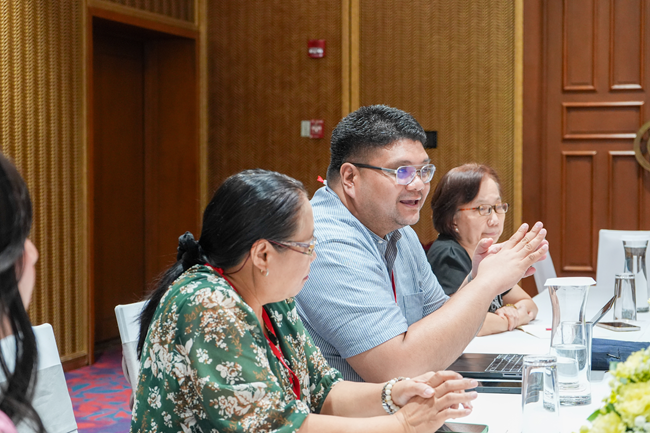
Representative of the ministries from Cambodia, Lao PDR, Malaysia, Myanmar, Philippines, Thailand, Timor-Leste and Viet Nam during the discussion with SEA-PLM Regional Secretariat
Myanmar is using SEA-PLM data to inform curriculum review, teacher development and resource allocation for schools and learners. The country has also developed practical guidebooks on reading, and mathematics.
In the Philippines, evidence from SEA-PLM has supported work to strengthen teacher’s assessment capacity. This includes mapping the national curriculum against SEA-PLM proficiency expectations and developing classroom assessment item banks that teachers can use to better understand and respond to students’ learning needs.
Viet Nam also shared how its national analysis has highlighted the need to support students who have not yet met the minimum reading expectations, strengthen higher-order thinking and writing skills, and improve opportunities for children from ethnic minority and disadvantaged communities.
The country's experiences show that evidence becomes meaningful when it is connected to the decisions educators and policy makers face every day on how to support teachers, how to allocate resources, how to adapt learning materials, and how to reach children who are at risk of being left behind.
Strengthening the pathway from evidence-to-policy and preparing for the next cycle with a clearer purpose
An important part of this work is SEA-PLM Initiative 2: Evidence-to-Policy linkages. Introduced following the 2024 assessment cycle, Initiative 2 supports participating countries in translating SEA-PLM findings into national dialogue, planning and interventions that respond to their own priorities. The National Steering Committee, led by the ministries of education, plays a central role in this process. Rather than applying a regional solution uniformly across countries, the approach recognises that each education system has its own challenges, resources and opportunities for change.
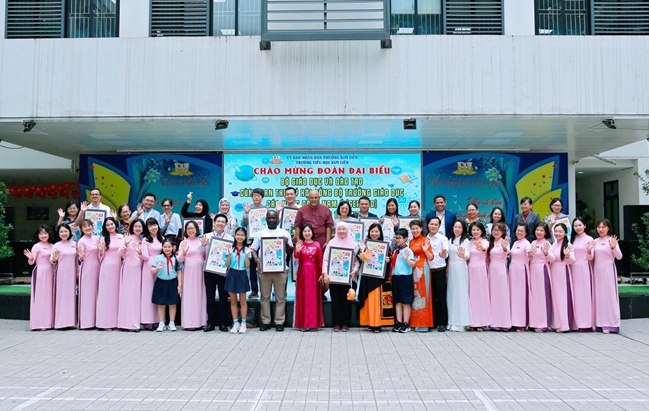
The meeting also brought the evidence-to-action discussion closer to the classroom. During the RSC Meeting, representatives from the SEA-PLM Regional Secretariat, partners and ministries of education visited Mai Dich Primary School and Kim Lien Primary School in Hanoi. The visits provided an opportunity to observe learning environments and reflect on how national and regional commitments can ultimately support children and teachers in schools.
 |
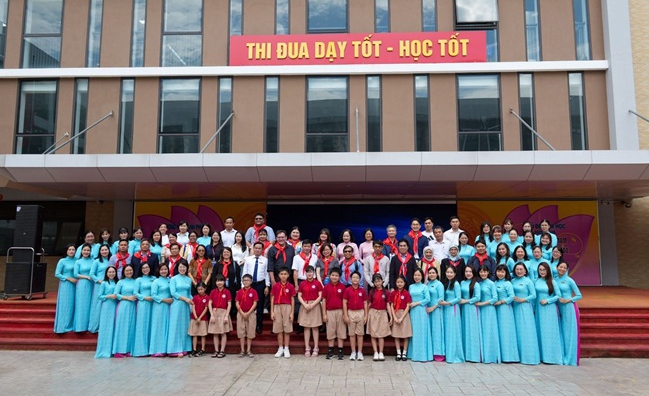 |
Group photo during school visit at Mai Dich Primary School and Kim Lien Primary School in Hanoi, Viet Nam
As SEA-PLM prepares for its next programme cycle, including SEA-PLM 2029, the RSC Meeting also provided an opportunity to consult on the SEA-PLM pluriannual Strategic Framework 2026-2031. The forthcoming cycle will continue to generate comparable information on children’s learning. At the same time, the work between assessment cycles will remain just as important: supporting countries to interpret findings, identify practical responses and learn from one another.
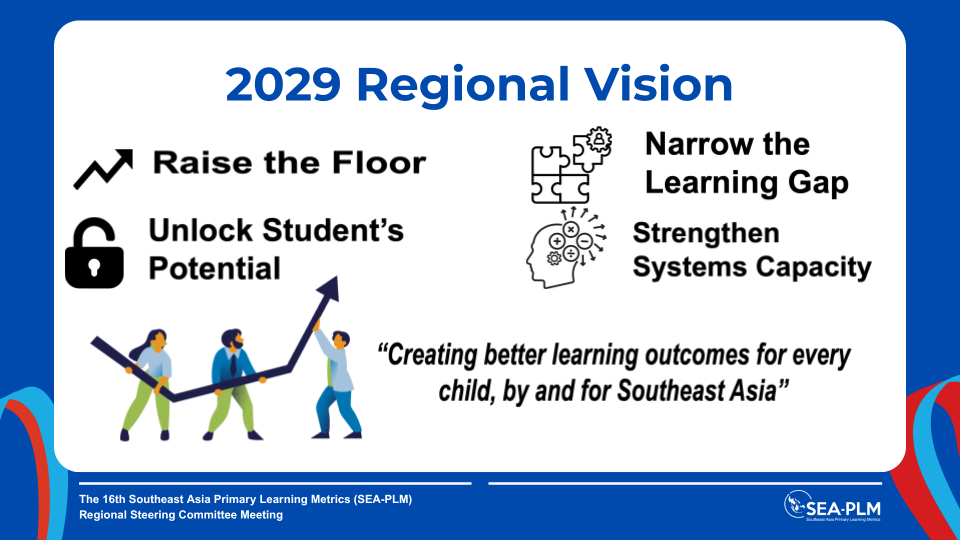
The discussion in Hanoi offered a reminder that data does not improve learning on its own. Change happens when evidence is understood, owned and used by the government for shaping education systems.
SEA-PLM 2024 has given countries a clearer picture of children’s learning across the region. The task now is to keep that evidence moving from regional findings to national priorities, from policy discussions to classroom support, and from learning gaps to better opportunities for every child.
–
SEA-PLM is supported by the Government of the Republic of Korea through the ASEAN-Korea Cooperation Fund (AKCF). Its content is the sole responsibility of the SEA-PLM Regional Secretariat and does not necessarily reflect the views of AKCF.”

|
|
|
|
|
|
|
|